
Housing shortages and rising rents are presenting Berliners and those who want to become one with increasing challenges again this year. The red – red – green government is now reacting with populist and regulatory measures, such as the rent cap for existing and new properties or a debate about the expropriation of large housing associations. On closer inspection, these measures appear to be a last-ditch attempt to pillory a scapegoat for years of misguided housing policy. Dislike and sentiment towards homeowners of all persuasions and the real estate industry has increased significantly and the tone has sharpened. Unfortunately, this does not fix the actual problems. Not a single new apartment will be created as a result of the planned measures. On the contrary: investors will be scared off by such draft laws and the number of urgently needed apartments will decrease and not increase.
There is currently little movement in the interest and apartment building market, as potential investors are unsettled by the current discussion about the rent cap. The number of transactions has decreased significantly and it remains to be seen whether Senator Katrin Lompscher’s planned law will be legally enforceable. The relief for tenants failed when the draft law was published, as many private and institutional landlords immediately announced rent increases. The effects of this and other plans by the red-red-green government will be felt by numerous tenants and owners and, on closer inspection, do not appear to have been thought through to the end.
Between 2013 and 2017, around 50,000 to 60,000 new Berliners came to the city every year. Ascending trend. In addition to the professional fields in politics and business, Berlin has become increasingly attractive as a science location and is becoming a new domicile for highly qualified people from a wide variety of nations. Around 190,000 new homes will be needed by 2030. Urgently needed living space can only be created in close cooperation with private investors. The planned housing policy measures will in no way contribute to this and will not provide any Berliners with new rental apartments or even property.
Constructive and fast-acting solutions are now more in demand than ever. The German Real Estate Association is calling for fewer regulations, more new housing construction and more home ownership. Free areas should be converted into building land in an unbureaucratic manner, leaner building regulations and speedy approval processes are overdue. The federal, state and local governments are called upon to reduce the value-added tax and real estate transfer tax that is due on housing construction so that housing becomes more affordable and people can purchase property.
After this excursion into the current and heated political discussion, we would like to give you an overview of the ongoing development in the city with our annual market report on selected districts and sub-markets.
Berlin is still one of the most dynamic cities in Germany and the growth of the Berlin economy can also be clearly observed in the positive developments on the job market. The unemployment rate has fallen significantly and is now consistently below 10%. Increasing population figures and growing economic output fuel the urgent need for housing. Most new apartments were built in the Mitte district, as this district also has the highest increase in population.
Asking rents and prices continued to rise significantly in 2018. However, the price increase slowed down compared to 2017. Prices for condominiums rose by around 12% in 2018. The median price per square meter is around EUR 4,350. The demand exceeds the supply of available apartments and leads to significant price increases. The persistently low level of interest rates often gives buyers monthly loan installments that are below the rent for comparable apartments. The tight rental market is often the impulse for many people looking for an apartment to seriously consider buying a property.
We currently have three Berlin districts in our market report.
Charlottenburg / Wilmersdorf
Steglitz / Zehlendorf
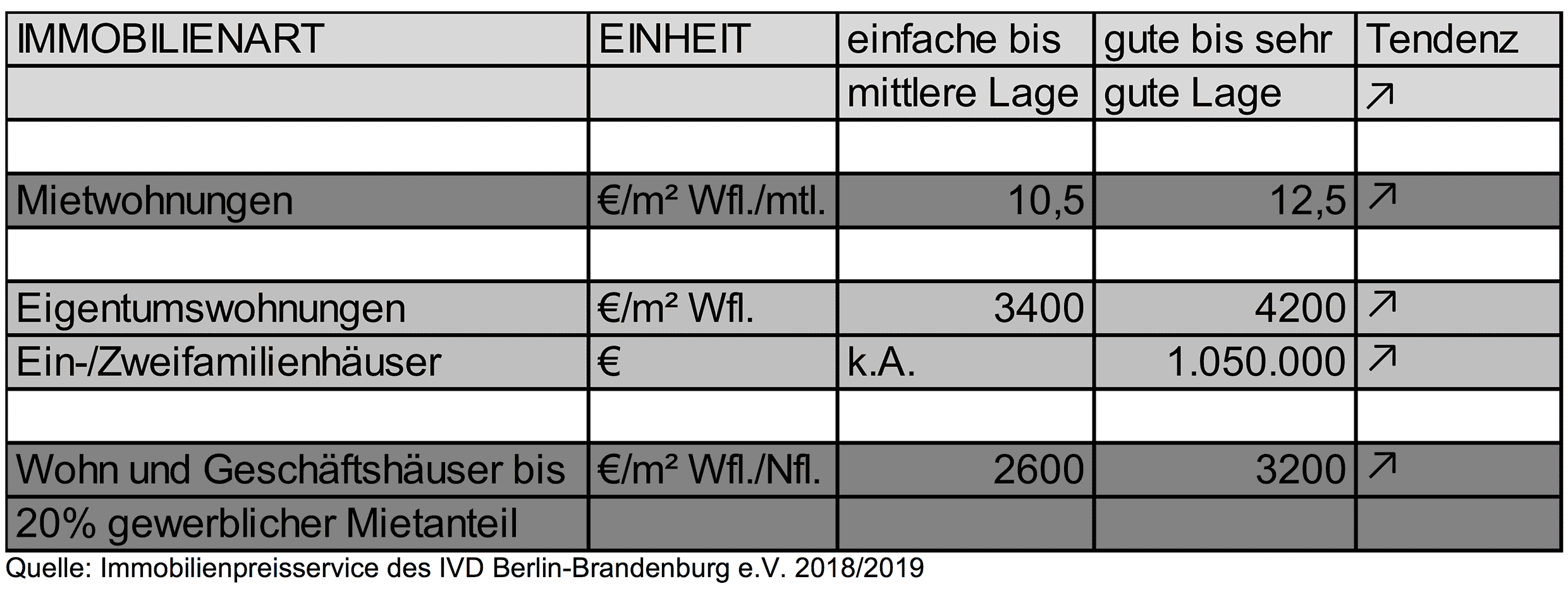
Zehlendorf is known as the villa district of Berlin and in fact the submarkets Dahlem, Schlachtensee, Nikolassee and Wannsee are among the most sought-after locations for single-family homes and villas. However, you can often find buildings from the post-war period here for affordable rents. The distance to the city center can be seen here in the lower rents. Dahlem is the leader when it comes to asking prices for existing properties, followed by Schlachtensee and Nikolassee. Here the market for houses and villas has continued to become scarce and demand is still high. Real estate prices in excess of EUR 2 million and standard land values of EUR 2,200 / m² are not uncommon in some sub-locations of Dahlem. The proximity to the city thanks to good S-Bahn and bus connections and the location of the Free University with a good mix of international and young people give this village-like part of the city its very special charm. The regions of Schlachtensee, Nikolassee and Wannsee bordering to the south stretch like a string of pearls with villas of the most varied architecture to the southwestern city limits of Berlin. All districts are attractive and offer a very high quality of life due to the micro-neighbourhoods and the proximity to the green with numerous parks and lakes. Lankwitz with its famous composers’ district is now very popular and also rare. In the last two years there have been significant price increases and a significant shortage of supply.
To the east, prices in the districts of Lichterfeld West Lankwitz and Zehlendorf Mitte are somewhat more moderate and the development is becoming denser. Some streets here are characterized by post-war and multi-story buildings. But there are also classic and stately old building apartments in this middle-class district. The side streets of the Schlossstraße shopping mile are popular, with quiet, green old buildings from the turn of the century and classic stylistic elements of the old building, such as stucco ceilings, double doors, parquet floors, etc. There are also wonderful old building apartments in historic city villas in Zehlendorf Mitte behind Teltower Damm and the Zehlendorf S-Bahn station. Vacant plots and derelict houses are being acquired by established project developers in this district, and very high-quality apartment buildings with large apartments and elegant furnishings are being built. In the new building segment, the m² price is then also in coveted sub-locations over EUR 10,000 per m². The most expensive one- and two-family houses are offered in this sub-market in Dahlem at approx. EUR 8,320 / m².
In terms of rents, the average rent for existing apartments is around EUR 12/m² and has increased by around 9.70% compared to the previous year. Newly built apartments are rented for approx. EUR 17.50/m². An increase of approx. 13% compared to the previous year can be recorded here.
Berlin Mitte
This district is the economic, political and cultural hub of the city and is familiar to everyone. The Museum Island, the Federal Chancellery, the Bundestag, numerous ministries and embassies dominate this district. The Humboldt University and the new city palace are reminiscent of the magnificent Prussian imperial era and tie in with it again. The new entrance portal on Museum Island, the James Simon Gallery, was recently opened according to plans by David Chipperfield. In short: there is a lot to see and discover here. And like in any metropolis in the world, living in the heart of the city is always attractive, but also expensive. In addition to magnificent new construction projects and stylish renovations from the Albtau, you can still find the relics of the GDR era with numerous prefabricated buildings that are gradually disappearing. This mix makes up the charm of this district and, in the opinion of many Berliners, should be preserved.
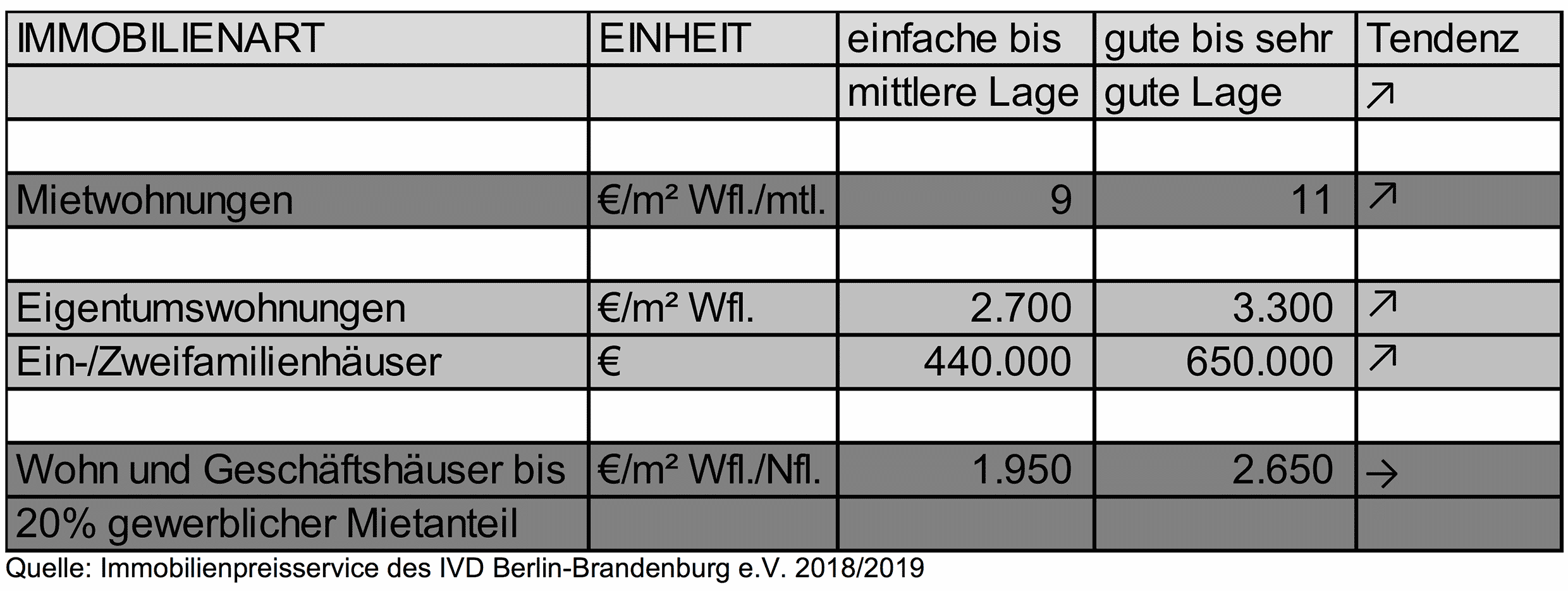
Demand in this district remains high and supply has declined significantly in recent years. Whether investment or personal use, people like to buy here. An average of around EUR 8,140/m² is required for new builds – existing properties change hands for an average of EUR 6,770/m². Last year, the prices for existing apartments rose by around 14% and in the new building segment by around 6.5%. The number of purchase offers has decreased significantly. Rental prices have also continued to rise. Existing apartments are currently changing tenants for approx. EUR 17.70/m² of living space – that is a price increase of approx. 9% compared to the previous year. Significantly more is required for new apartments. The average asking price is currently around EUR 20.00/m² of living space. This is an increase of approx. 17.6% compared to the previous year.
Since 2011, the market for residential and commercial buildings and apartment buildings in the Mitte district has only known one direction. Prices have risen year after year and sellers have participated in significant increases in value and offers have become significantly scarcer year after year. Square meter prices between EUR 3,300 and EUR 4,400 per square meter and factors of more than 30 times were no exception.